 TypeShade
Graticule
지도라면 다 그리는 경위선 격자.
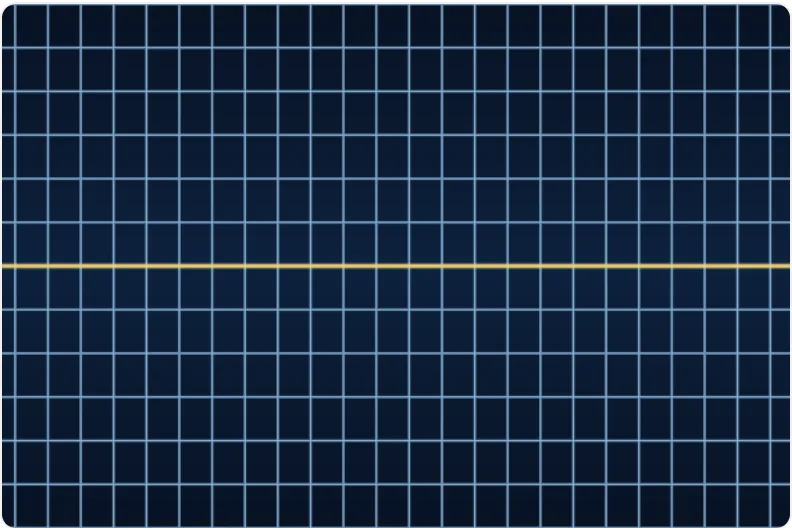
// ═══ typeshade example — graticule (lon/lat grid) ═══//// A cartographic shader: the lon/lat graticule every map draws. The fragment maps screen// UV → longitude/latitude, draws anti-aliased grid lines at a uniform `spacing` (degrees)// with screen-constant width via `fwidth`, emphasises the equator in gold, and slowly// pans longitude over `time` so the globe appears to spin. Same DSL → WGSL + WebGL2 GLSL.
import {  fn,  module,  vec3,  vec4,  abs,  fract,  smoothstep,  max,  mix,  clamp,  fwidth,  f32,  f32T,} from '../src/index.js';import { VsOut, vs, fullscreenUniforms } from './_fullscreen.js';import type { ShaderExample } from './_shared.js';const U = fullscreenUniforms({ spacing: f32T });
const fs = fn(  'fs',  { vo: VsOut },  ({ vo }) => {    const uv = vo.uv;    const sp = U.field.spacing;    // UV → lon/lat, with a slow longitudinal pan over time.    const lon = uv.x.mul(360).sub(180).add(U.field.time.mul(8));    const lat = uv.y.mul(180).sub(90);
    // Distance (in degrees) to the nearest gridline, for lon and lat.    const dLon = abs(fract(lon.div(sp).add(0.5)).sub(0.5)).mul(sp);    const dLat = abs(fract(lat.div(sp).add(0.5)).sub(0.5)).mul(sp);    // Screen-constant line width: fwidth gives degrees-per-pixel here.    const gLon = f32(1).sub(smoothstep(0, fwidth(lon).mul(1.5), dLon));    const gLat = f32(1).sub(smoothstep(0, fwidth(lat).mul(1.5), dLat));    const grid = max(gLon, gLat);    // Equator emphasis (fixed — uses the un-panned latitude).    const eq = f32(1).sub(smoothstep(0, fwidth(lat).mul(3), abs(lat)));
    // Ocean background: deeper toward the poles.    const ocean = mix(vec3(0.05, 0.13, 0.24), vec3(0.03, 0.07, 0.14), abs(lat).div(90));    const lineCol = vec3(0.55, 0.72, 0.86);    const withGrid = mix(ocean, lineCol, clamp(grid, 0, 1));    const withEq = mix(withGrid, vec3(0.96, 0.84, 0.45), clamp(eq, 0, 1));    return vec4(withEq, 1);  },  { stage: 'fragment', retAttr: '@location(0)' },);
const graticuleModule = module({  structs: [U.struct, VsOut.decl],  bindings: [U.binding],  funcs: [vs, fs],});
export const graticule: ShaderExample = {  id: 'graticule',  title: 'Graticule',  blurb:    'The lon/lat grid every map draws — anti-aliased with screen-constant width via fwidth, gold equator, slowly spinning over time. Adjust the spacing in degrees.',  category: 'cartographic',  file: 'graticule.ts',  module: graticuleModule,  renderable: true,  controls: {    time: { kind: 'time' },    resolution: { kind: 'resolution' },    spacing: { kind: 'slider', label: 'Spacing (°)', min: 5, max: 45, step: 1, value: 15 },  },};
struct Uniforms { time: f32, resolution: vec2<f32>, spacing: f32,}
struct VsOut { @builtin(position) pos: vec4<f32>, @location(0) uv: vec2<f32>,}
@group(0) @binding(0) var<uniform> U: Uniforms;
@vertexfn vs(@builtin(vertex_index) vi: u32) -> VsOut { let _cse0 = ((f32((vi & 1u)) * 4.0) - 1.0); let _cse1 = ((f32((vi >> 1u)) * 4.0) - 1.0); return VsOut(vec4<f32>(_cse0, _cse1, 0.0, 1.0), vec2<f32>(((_cse0 * 0.5) + 0.5), ((_cse1 * 0.5) + 0.5)));}
@fragmentfn fs(vo: VsOut) -> @location(0) vec4<f32> { let _cse3 = ((vo.uv.y * 180.0) - 90.0); let _cse0 = abs(_cse3); let _cse1 = (((vo.uv.x * 360.0) - 180.0) + (U.time * 8.0)); let _cse2 = fwidth(_cse3); return vec4<f32>(mix(mix(mix(vec3<f32>(0.05, 0.13, 0.24), vec3<f32>(0.03, 0.07, 0.14), (_cse0 / 90.0)), vec3<f32>(0.55, 0.72, 0.86), clamp(max((1.0 - smoothstep(0.0, (fwidth(_cse1) * 1.5), (abs((fract(((_cse1 / U.spacing) + 0.5)) - 0.5)) * U.spacing))), (1.0 - smoothstep(0.0, (_cse2 * 1.5), (abs((fract(((_cse3 / U.spacing) + 0.5)) - 0.5)) * U.spacing)))), 0.0, 1.0)), vec3<f32>(0.96, 0.84, 0.45), clamp((1.0 - smoothstep(0.0, (_cse2 * 3.0), _cse0)), 0.0, 1.0)), 1.0);}#version 300 esprecision highp float;precision highp int;
out vec2 uv;
void main() { uint vi = uint(gl_VertexID); float _cse0 = ((float((vi & 1u)) * 4.0) - 1.0); float _cse1 = ((float((vi >> 1u)) * 4.0) - 1.0); gl_Position = vec4(_cse0, _cse1, 0.0, 1.0); uv = vec2(((_cse0 * 0.5) + 0.5), ((_cse1 * 0.5) + 0.5));}#version 300 esprecision highp float;precision highp int;
layout(std140) uniform Uniforms { float time; vec2 resolution; float spacing;} U;in vec2 uv;layout(location = 0) out vec4 _ret;
void main() { float _cse3 = ((uv.y * 180.0) - 90.0); float _cse0 = abs(_cse3); float _cse1 = (((uv.x * 360.0) - 180.0) + (U.time * 8.0)); float _cse2 = fwidth(_cse3); _ret = vec4(mix(mix(mix(vec3(0.05, 0.13, 0.24), vec3(0.03, 0.07, 0.14), (_cse0 / 90.0)), vec3(0.55, 0.72, 0.86), clamp(max((1.0 - smoothstep(0.0, (fwidth(_cse1) * 1.5), (abs((fract(((_cse1 / U.spacing) + 0.5)) - 0.5)) * U.spacing))), (1.0 - smoothstep(0.0, (_cse2 * 1.5), (abs((fract(((_cse3 / U.spacing) + 0.5)) - 0.5)) * U.spacing)))), 0.0, 1.0)), vec3(0.96, 0.84, 0.45), clamp((1.0 - smoothstep(0.0, (_cse2 * 3.0), _cse0)), 0.0, 1.0)), 1.0);}Graticule. 빌드할 때 그린 화면입니다.
WGSL과 GLSL 탭은 커밋 c66579bf의 컴파일러가 직접 낸 출력입니다. 컴파일러의 출력 검사가 구워 둔 골든 파일에서 그대로 읽어 왔습니다(emit-goldens.test.ts).
이 예제는 fn() 빌더 API로 작성해서 Playground의 편집기가 받지 않습니다.